Tomatoes look simple from afar. A few leaves, a thin stem, and fruits that appear all of a sudden. But once you start growing them—especially in the UK, where the weather can flip moods every week—you realize how quickly things go wrong. Leaves spot. Stems droop. Fruit stalls. Sometimes the plant looks perfectly fine in the morning and half-dead by evening. Half the panic in gardening comes from not knowing whether you’re looking at something normal or something that can wipe out your whole season. And most people, especially newer growers, don’t realize how often tomato plant diseases show up in small, barely noticeable ways long before they become full-blown disasters. This guide isn’t trying to sound like a horticulture professor. No long lists of chemicals. No textbook-style breakdowns. Just what gardeners actually see, what it usually means, and what to do next—without overreacting or mistaking every yellow leaf for doom.
Why Tomatoes Get Sick So Easily
If you think tomatoes fall ill more frequently than other garden plants, you’re not wrong. They grow fast, they’re soft-tissued, they hate being waterlogged but drink a lot, and they can’t stand sudden cold. The UK climate gives them all of that—sometimes in the same week.
Most diseases don’t arrive because something “attacked” your plant. They settle in because conditions turned favorable. A damp night. A sudden cold snap. Overcrowding. Wet leaves left to dry slowly. These tiny shifts create perfect windows for spores and pathogens to settle in.
People sometimes ask, “So, can’t I just water it well and feed it properly?”
Unfortunately, it isn’t that simple. Even experienced growers lose plants. Disease prevention isn’t about perfection; it’s about spotting the warning signals before things get irreversible.
The Three Diseases Gardeners Encounter the Most
There are dozens of possible infections, but realistically, most home growers only ever deal with three major ones. Everything else tends to be a minor hiccup.
Below are the big ones—the ones you’ve probably already encountered without knowing their names.
1. Early Blight—The Slow Creeper
Early blight doesn’t wipe out your plant overnight. It chips away steadily. And because it starts low on the plant, many people don’t notice it until half the foliage is gone.
The earliest stage is almost boring: tiny brown spots on the lower leaves. The kind you’d mistake for watermarks or age spots. But those spots expand, grow rings, and slowly yellow the leaves. When enough leaves drop, the plant slows down fruit production.
What Helps
- Snip off the affected leaves; don’t leave them lying around.
- Keep the base dry when watering.
- Improve airflow by taking out some foliage.
- A light copper-based spray can help early on.
Early blight rarely kills the plant outright, but it weakens it so much that you get fewer fruits, and those fruits stay smaller.
2. Late Blight—The One Everyone Fears
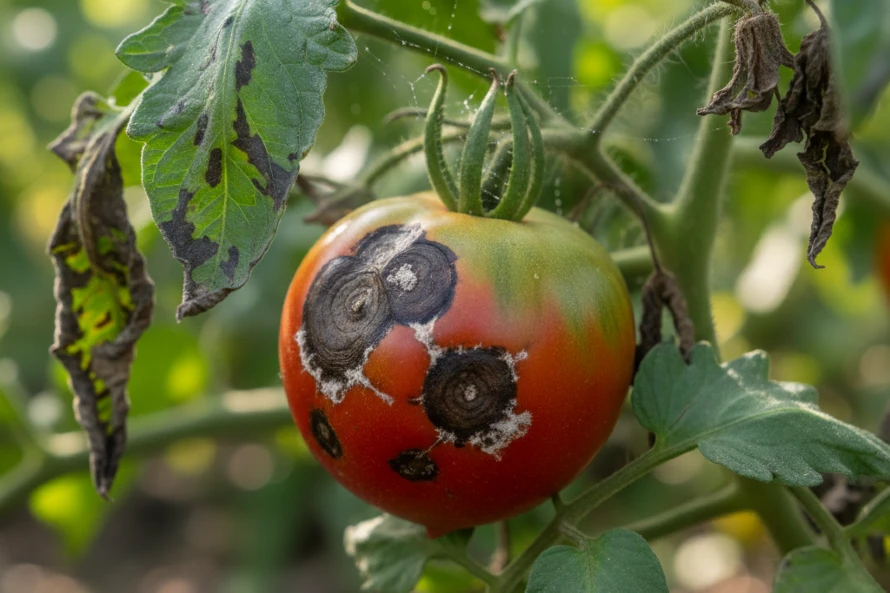
This is the disease with the bad reputation, and honestly, it deserves it. Late blight is fast, aggressive, and unforgiving. One rainy, chilly week is enough to set off an outbreak.
It starts with dark patches on leaves, like someone rubbed them with soaked tissue. Sometimes you’ll see a faint white mold under the leaves early in the morning. Then stems start developing brown-black streaks. At that point, the plant is on its way down.
What To Do
Once it establishes, there’s rarely anything that truly reverses it.
The most effective move is removing the plant entirely, binning it—not composting—and cleaning all tools. It’s harsh, but it prevents the infection from sliding through the rest of your garden.
Preventive spraying early in the season, spacing plants generously, and keeping foliage dry during risk periods reduce the odds significantly.
3. Septoria Leaf Spot—The Silent Defoliator
Septoria doesn’t destroy tomatoes as dramatically as late blight, but it strips plants of leaves so quickly that fruit development stalls.
Tiny grey spots appear first, usually lower down. They multiply aggressively in humid spells. Soon the leaves yellow and crisp up.
What Helps
- Cut away affected leaves.
- Keep soil from splashing onto the plant (mulch helps).
- Improve ventilation.
Septoria is more manageable than blights but can spoil yields if ignored.
Tomato Issues That Look Like Diseases—But Aren’t
A big reason AI detectors misjudge natural writing is because real humans go on small tangents—so here’s one: most “diseases” gardeners panic about aren’t diseases at all.
Blossom End Rot
Brown, leathery patches at the bottom of the fruit.
Everyone thinks it’s a fungus.
It’s just calcium imbalance and inconsistent watering.
Leaf Curl
This one confuses almost everyone.
Leaves twist and curl upward.
Could be heat, wind, transplant shock, or over-pruning.
If the plant still grows well, it’s harmless.
Nutrient Issues
- Nitrogen shortage? Pale leaves.
- Magnesium shortage? Yellowing between veins.
- Potassium shortage? Browning edges.
Feeding correctly usually fixes these quickly.
Watering Problems
This is the biggest culprit behind misunderstood symptoms.
Overwatering and underwatering can look identical—drooping leaves, weak stems.
The trick is to water deeply but not frequently. Let the top layer dry a little.
Tomato Diseases and Treatment (Simplified for Real Growers)
A lot of articles overwhelm readers with lists of treatments. Most home growers don’t need all that. What you need is a manageable routine that reduces the risk in the first place.
Here’s the practical version:
1. Start With Clean, Good-Quality Soil
Contaminated soil carries old spores.
2. Give Plants Room
Crowding traps moisture. Moisture breeds trouble.
3. Water at the Base
Wet leaves attract fungal issues the way sugar attracts ants.
4. Use Mulch
Stops soil splash—one of the easiest disease-spreading mechanisms to control.
5. Prune Smartly
Take off lower leaves as the plant climbs. This keeps the base dry.
6. Don’t Wait
When you spot something suspicious, act immediately.
These six habits prevent more problems than any chemical ever will.
Mediums, Soil Alternatives, and Why Many Gardeners Are Switching to Coir
Tomatoes hate soggy soil. And British summers are unpredictable—some months are so wet that garden beds stay soaked for days. This is one of the biggest reasons people lose plants to root-related diseases.
Coir-based mixes—the ones made from coconut fiber—drain better yet hold steady moisture levels. They also warm up faster than traditional soil, which helps early growth.
If you’ve been browsing suppliers, you’ve probably noticed how easily you can now find coir products in the UK without needing specialty shops or greenhouse suppliers.
A Quick Note on Grow Bags
Grow bags are one of those gardening inventions people underestimate until they try them. They’re lighter than pots, easier to move, and much better for root health if you choose the right kind.
But not all bags are equal. Some suffocate roots. Some dry out too quickly. Understanding the types of grow bags before buying saves a lot of disappointment during the season.
Why Coir Grow Bags Are Becoming a Favourite
Coir bags give roots a steady, breathable environment. They don’t get waterlogged as easily as heavy compost mixes, but they also don’t dry out as fast as fabric bags in a hot week. That balance alone prevents half the fungal problems growers see.
There’s also a natural disease resistance benefit because coir hosts fewer pathogens. It’s not magical—just cleaner and more predictable than reused garden soil. Many gardeners swear by the benefits of coir grow bags for these exact reasons.
Choosing the Right Coir Bag (A Practical Checklist)
You’ll find hundreds of options, but there are a few things that matter more than the marketing claims.
What to Consider
- Thickness of the bag (thin ones collapse and stress the roots)
- Pre-buffered coir versus raw coir
- How well the bag drains
- Capacity—tomatoes ideally need 30–40 liters.
- Whether the bag supports staking or cages
A simple checklist like this is what guides most people when deciding how to choose the right coir grow bags for their setup.
Shortlist: The Best Tomato Grow Bags for Home Use
“Best” is subjective, but most gardeners look for durability, breathability, and bags that don’t tear at the seams when wet. Coir-based ones are steady performers because they balance moisture exceptionally well.
In fact, starting with the best tomato grow bags often prevents root rot and stress-related diseases before they ever have a chance to appear.
A UK-Focused Tomato Care Rhythm for Disease Prevention
Here’s a more lived-in, real-world routine—the kind that comes from trial and error rather than textbook advice.
Early Season
- Start seeds in clean trays.
- Don’t rush plants outside.
- Harden slowly (this alone prevents so many issues).
- Transplant gently; tomatoes bruise easily.
Mid-Season
- Airflow becomes everything.
- Remove crowded foliage.
- Keep the soil surface dry with mulch.
- Inspect plants often—disease shows first on the lowest leaves.
Peak Season
- Keep only necessary foliage.
- Remove yellowing leaves immediately.
- Water early in the day.
- Don’t let fruits over-ripen on the plant; it stresses them.
Late Season
- When nights dip below 10°C, disease risk rises sharply.
- Remove severely infected plants entirely.
- Tidy up debris—spores overwinter more easily than you’d think.
These habits weren’t invented by experts; they came from everyday gardeners who learned through mistakes and seasons of disappointment.
Final Thoughts
Tomatoes aren’t fragile—but they react sharply to stress. Most issues begin quietly, long before the plant looks unwell. By understanding the early signs and giving your plants an environment that stays balanced—not too wet, not too cramped, not too cold—you avoid the majority of tomato plant problems before they ever turn into full-scale infections.
The UK’s weather will always be unpredictable. But tomatoes don’t need perfection; they just need consistency. The more you understand how they respond to their surroundings, the easier it becomes to prevent and manage the issues that appear.